Introduction
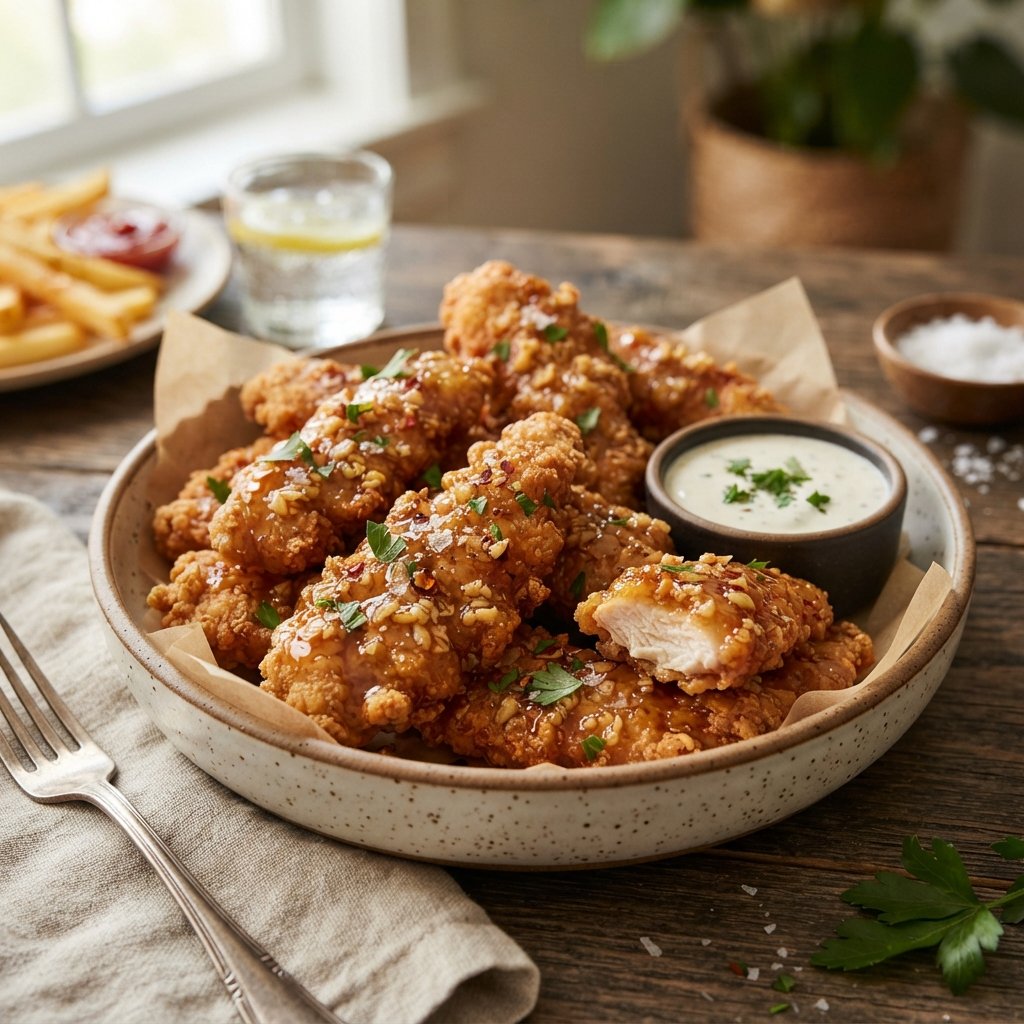
There is a specific kind of magic that happens when the savory richness of garlic meets the floral sweetness of honey, all anchored by the comforting, nutty depth of browned butter. When you apply this trifecta of flavors to chicken tenders that are impossibly crispy on the outside and succulent on the inside, you aren’t just making dinner; you are creating a culinary event. Crispy and Juicy Honey Butter Garlic Chicken Tenders represent the pinnacle of modern comfort food. They bridge the gap between a quick weeknight meal and a restaurant-quality indulgence.
This dish is designed to satisfy every craving. It offers the crunch of a classic fried chicken tender, the tenderness of a slow-cooked roast, and a glaze that clings to every ridge of the golden crust. Whether you are feeding a hungry family, hosting a game night, or simply treating yourself to a well-deserved meal, these tenders deliver a symphony of textures and tastes that are hard to resist. The following guide will take you through the history, the science, and the art of crafting the perfect honey butter garlic chicken tender.
The History
The concept of the chicken tender is deeply rooted in American culinary history, specifically emerging from the Southern United States. Originally, “tenders” referred to the tenderloin muscle found underneath the breast of the chicken—a strip of meat naturally more tender than the rest. In the mid-20th century, these strips began appearing on menus in roadside diners and Southern “meat-and-three” restaurants, often simply breaded and fried.
The evolution into the “Honey Butter Garlic” variation is a more modern phenomenon, reflecting the global fusion trends of the late 20th and early 21st centuries. The flavor profile draws heavy inspiration from Asian cuisine, particularly Korean and Chinese dishes that utilize garlic and honey glazes (such as Dakgangjeong or honey garlic shrimp). However, the addition of butter pushes it firmly into Western comfort food territory. This fusion creates a dish that feels familiar yet exotic, combining the technique of American frying with the bold, sticky sauces of the East. Today, this flavor combination has become a staple in gastropubs and home kitchens alike, celebrated for its ability to elevate humble poultry into something extraordinary.
Ingredients Breakdown
To achieve the perfect balance of crispiness and juiciness, one must understand the role of each component in the recipe. This is not just a list of items; it is a chemical formula for deliciousness.
The Chicken
Chicken Tenderloins: While you can cut breast meat into strips, using actual tenderloins is superior. They are uniform in size, ensuring even cooking, and they possess a natural tenderness that requires less marinating time. They are the “filet mignon” of the chicken world.
The Marinade (The Juiciness Factor)
Buttermilk: This is the secret weapon. The acidity in buttermilk breaks down the proteins in the chicken gently, resulting in a texture that is fall-apart tender. It also adds a subtle tang that cuts through the sweetness of the glaze later.
Garlic Powder & Onion Powder: Adding these to the marinade ensures the flavor penetrates the meat itself, rather than just sitting on the surface.
The Dredge (The Crispiness Factor)
All-Purpose Flour: The base of the coating. It provides structure.
Cornstarch: This is the critical ingredient for extra crunch. Cornstarch has a lower protein content than flour and absorbs less oil, creating a lighter, shatteringly crisp crust that stays crunchy even after being tossed in sauce.
Paprika & Cayenne: These provide color and a very subtle heat that wakes up the palate without overpowering the honey.
The Honey Butter Garlic Glaze
Unsalted Butter: We use unsalted to control the sodium levels. Browning the butter (cooking it until the milk solids turn golden) adds a nutty, toasted flavor that elevates the dish from good to gourmet.
Fresh Garlic: Powder won’t work here. You need fresh, minced garlic to get that pungent, aromatic kick that defines the dish.
Honey: A high-quality clover or wildflower honey works best. It provides the sticky viscosity needed to coat the tenders and balances the saltiness of the soy sauce.
Soy Sauce: This adds umami (savory depth) and salt, preventing the dish from being cloyingly sweet.
Step-by-Step Recipe Narrative
Creating these tenders is a process of layers. First, we must prepare the meat. Place your chicken tenderloins in a shallow bowl and cover them with buttermilk mixed with a pinch of salt and pepper. Let this sit in the refrigerator for at least 30 minutes, though up to 4 hours is ideal. This brining process is non-negotiable for juicy results.
While the chicken rests, prepare your breading station. In a wide, shallow dish, whisk together the flour, cornstarch, paprika, garlic powder, onion powder, salt, and black pepper. The cornstarch is vital here; it interacts with the moisture in the buttermilk to create a craggy, uneven surface on the chicken. These nooks and crannies are where the oil bubbles up during frying, creating maximum surface area for crunch.
Next comes the frying. Heat your oil (peanut or vegetable oil works best due to high smoke points) in a heavy-bottomed skillet or Dutch oven to 350°F (175°C). Use a thermometer; guessing the temperature is the enemy of good frying. If the oil is too cool, the chicken will be greasy. If it’s too hot, the outside will burn before the inside cooks.
Remove the chicken from the buttermilk, letting the excess drip off slightly, and dredge it thoroughly in the flour mixture. Press the flour into the meat to ensure a thick, even coating. Carefully lower the tenders into the hot oil. Do not overcrowd the pan, or the temperature will drop. Fry for about 3-4 minutes per side until they are a deep golden brown and the internal temperature reaches 165°F (74°C). Transfer them to a wire rack set over a baking sheet to drain. Avoid paper towels, which can trap steam and make the bottom soggy.
Finally, the glaze. In a clean skillet over medium heat, melt the butter. Let it bubble and foam until it smells nutty and turns a light amber color. Add the minced garlic and sauté for just 30 seconds until fragrant—be careful not to burn it. Stir in the honey and soy sauce. The mixture will bubble vigorously. Toss the fried chicken tenders in this glaze until every inch is coated in the glossy, sticky perfection. Serve immediately while the contrast between the hot, crisp shell and the juicy interior is at its peak.
Ingredients
- For the Chicken:
- 1.5 lbs (700g) chicken tenderloins
- 1 cup buttermilk
- 1 teaspoon salt
- 1/2 teaspoon black pepper
- For the Breading:
- 1 cup all-purpose flour
- 1/2 cup cornstarch
- 1 teaspoon paprika (smoked paprika adds a nice depth)
- 1 teaspoon garlic powder
- 1 teaspoon onion powder
- 1/2 teaspoon cayenne pepper (optional, for heat)
- 1 teaspoon salt
- Oil for frying (vegetable, canola, or peanut)
- For the Honey Butter Garlic Glaze:
- 4 tablespoons unsalted butter
- 4-5 cloves garlic, minced finely
- 1/3 cup honey
- 2 tablespoons soy sauce (low sodium preferred)
- 1 teaspoon apple cider vinegar (to cut the sweetness)
- Fresh parsley or chopped green onions for garnish
- Sesame seeds for garnish (optional)
Directions
- Marinate: In a bowl, combine chicken tenderloins, buttermilk, salt, and pepper. Cover and refrigerate for at least 30 minutes.
- Prep Breading: In a shallow dish, whisk together flour, cornstarch, paprika, garlic powder, onion powder, cayenne, and salt.
- Heat Oil: Pour oil into a large skillet or Dutch oven until it is about 1 inch deep. Heat over medium-high heat until it reaches 350°F (175°C).
- Dredge: Remove chicken from buttermilk. Dredge each piece thoroughly in the flour mixture, pressing down to adhere. Shake off excess.
- Fry: Carefully place chicken in the hot oil in batches. Fry for 3-4 minutes per side until golden brown and cooked through (internal temp 165°F). Place on a wire rack to cool slightly.
- Make Glaze: While chicken rests, melt butter in a large pan over medium heat. Cook until butter begins to brown and smell nutty. Add minced garlic and cook for 30 seconds.
- Combine: Stir in honey, soy sauce, and vinegar. Simmer for 1-2 minutes until the sauce thickens slightly and becomes bubbly.
- Toss: Add the fried chicken tenders to the pan with the glaze. Toss gently until fully coated.
- Serve: Garnish with green onions and sesame seeds. Serve immediately.
Tips for Success
The Double Dredge Technique: For an extra-thick, craggy crust, dip the chicken in the buttermilk, then the flour, then back into the buttermilk, and finally back into the flour. This creates a heavy armor that stays incredibly crunchy.
Don’t Skip the Wire Rack: When frying, always drain fried foods on a wire rack rather than paper towels. Paper towels trap steam against the bottom of the chicken, turning your crispy crust soggy within minutes. A wire rack allows air to circulate.
Garlic Management: Garlic burns very quickly, especially in butter. When making the glaze, keep the heat at medium, not high. If the garlic turns black, it will taste bitter and ruin the sauce. If it cooks too fast, remove the pan from the heat momentarily.
Resting the Meat: Let the chicken rest for 5 minutes after frying but before glazing. This allows the juices to redistribute within the meat. If you cut or glaze it immediately while piping hot, the juices may escape, leading to drier meat.
Variations and Customizations
Spicy Honey Garlic: Add 1 tablespoon of Sriracha or Gochujang (Korean chili paste) to the glaze for a significant kick that pairs beautifully with the sweet honey.
Air Fryer Version: For a healthier option, spray the breaded chicken generously with oil and air fry at 380°F (190°C) for 10-12 minutes, flipping halfway through. Note that the crust will be slightly less shattering than deep-fried, but still delicious.
Gluten-Free: Substitute the all-purpose flour with a 1:1 gluten-free baking blend. Ensure your soy sauce is replaced with Tamari or Coconut Aminos.
Lemon Herb Twist: Add the zest of one lemon and a teaspoon of dried thyme to the glaze for a brighter, more Mediterranean flavor profile.
Health Considerations and Nutritional Value
While this dish is undeniably an indulgence, understanding its nutritional profile helps in enjoying it mindfully. Chicken tenderloins are an excellent source of lean protein, essential for muscle repair and satiety. However, the frying process and the sugar content in the honey glaze increase the calorie and carbohydrate count.
Caloric Density: A serving of 4-5 tenders can range from 400 to 600 calories depending on the amount of oil absorbed and the thickness of the glaze.
Sodium Watch: Soy sauce and added salt contribute to sodium levels. Using low-sodium soy sauce and reducing the added salt in the breading can help manage this.
Balancing the Meal: To make this a balanced meal, serve the tenders with fiber-rich sides. A crisp coleslaw, steamed broccoli, or a fresh garden salad with a vinaigrette dressing helps cut through the richness of the butter and provides necessary vitamins and fiber.
FAQ
Can I make these ahead of time?
You can bread the chicken and keep it in the fridge for up to 24 hours before frying. However, for the best texture, fry and glaze them immediately before serving. Reheating fried chicken often results in a loss of crispiness.
My glaze is too runny. How do I fix it?
Simmer the glaze for a few more minutes to allow the water content to evaporate. Alternatively, mix 1 teaspoon of cornstarch with 1 tablespoon of cold water (a slurry) and whisk it into the bubbling glaze to thicken it instantly.
Can I use chicken breast instead of tenderloins?
Yes. Simply slice chicken breasts into strips about 1 inch thick. Try to cut them with the grain to ensure they hold together well during frying.
How do I store leftovers?
Store leftovers in an airtight container in the refrigerator for up to 3 days. To reheat, use an oven or air fryer at 375°F for 5-8 minutes to restore crispiness. Avoid the microwave, which will make the breading rubbery.
Summary
These Honey Butter Garlic Chicken Tenders combine a buttermilk-brined interior with a cornstarch-enhanced crispy crust, all tossed in a rich, sticky glaze of browned butter, fresh garlic, and honey. It is the ultimate comfort food fusion that delivers maximum flavor and texture in every bite.