Introduction
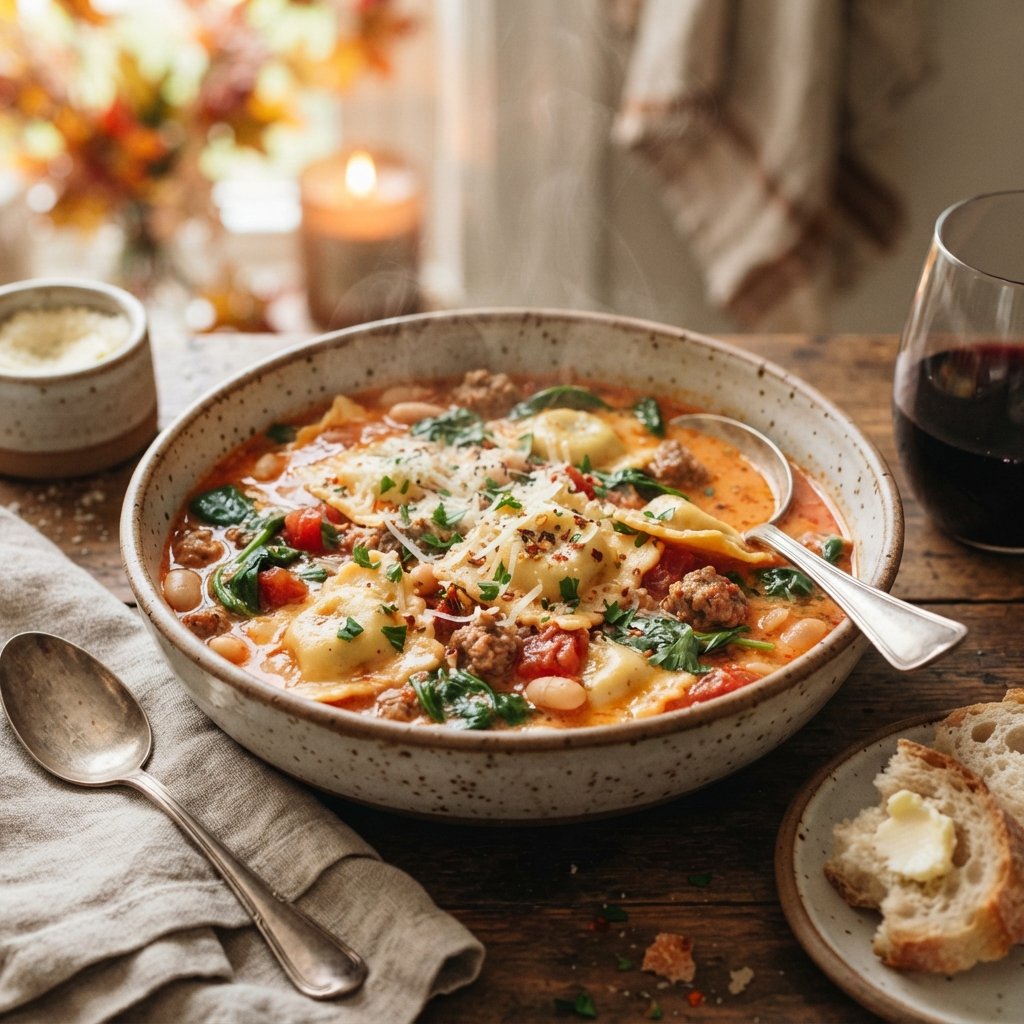
There is nothing quite like the embrace of a warm bowl of soup when the air turns crisp and the leaves begin to fall. Tuscan Ravioli Soup stands as a pinnacle of comfort food, merging the rustic elegance of Italian countryside cooking with the hearty satisfaction required for the coldest months of the year. This soup is not merely a meal; it is an experience that fills the kitchen with the aromatics of garlic, simmering tomatoes, and fresh herbs, promising warmth from the inside out. Perfect for family gatherings, quiet weeknight dinners, or entertaining guests during the holiday season, this dish balances richness with freshness, creating a harmony of flavors that lingers on the palate.
The beauty of Tuscan Ravioli Soup lies in its simplicity and its depth. Unlike complex stews that require hours of monitoring, this soup comes together relatively quickly yet tastes as though it has been simmering all day. The cheese-filled ravioli provides a delightful textural contrast to the tender vegetables and savory broth, while a touch of cream or coconut milk adds a luxurious velvety finish. Whether you are a seasoned home cook or a beginner looking to impress, this recipe offers a forgiving yet sophisticated platform to explore the flavors of Tuscany without leaving your kitchen.
As we delve into this comprehensive guide, you will discover not just how to make this soup, but why each element matters. From the selection of the perfect tomatoes to the technique of wilting the greens, every step is designed to elevate the final result. Prepare to transform simple grocery store ingredients into a masterpiece of comfort that will become a staple in your fall and winter repertoire.
The History
To understand Tuscan Ravioli Soup, one must first appreciate the rich culinary tapestry of Tuscany, a region in central Italy renowned for its high-quality ingredients and straightforward cooking techniques. Tuscan cuisine, often referred to as cucina povera or “peasant cooking,” historically focused on making the most of available local resources. While pasta has been a staple in Italy since at least the 13th century, the specific concept of stuffed pasta like ravioli evolved over centuries, originally created as a way to use up leftover meats and cheeses by wrapping them in dough.
The transformation of ravioli from a standalone pasta dish into a soup component is a fascinating evolution of Italian-American cuisine. In traditional Italy, pasta in broth (pastina in brodo) is common, but large stuffed pasta in a tomato-cream base is more indicative of the adaptations made by Italian immigrants in the United States during the 20th century. This fusion maintained the soul of Italian cooking while adapting to the availability of ingredients in America, such as canned tomatoes and heavy cream. The addition of kale or spinach nods to the Tuscan love for dark leafy greens, particularly cavolo nero (black kale), which is hardy enough to withstand the winter months.
Today, this soup represents a modern classic. It bridges the gap between the old world and the new, honoring the tradition of slow-simmered flavors while accommodating the fast-paced lifestyle of the modern cook. It is a dish that celebrates the harvest season, utilizing root vegetables, hardy greens, and preserved tomatoes, making it historically appropriate for fall and winter consumption when fresh produce was once scarce. By cooking this soup, you are participating in a culinary lineage that values warmth, community, and the sustenance of the body during the colder seasons.
Ingredients Breakdown
The Ravioli: The star of the show is undoubtedly the ravioli. For the best texture, fresh cheese ravioli found in the refrigerated section is superior to frozen or dried varieties. Fresh pasta cooks quickly and retains a tender bite that complements the broth. Look for ravioli filled with ricotta and spinach or a four-cheese blend. The quality of the cheese filling impacts the overall richness of the soup, so opting for a brand that uses real aged cheeses rather than processed fills will yield a more authentic flavor profile.
The Tomatoes: The base of the soup relies heavily on the quality of the tomatoes. Crushed San Marzano tomatoes are the gold standard. Grown in the volcanic soil near Mount Vesuvius, these tomatoes are naturally sweeter and less acidic than standard varieties. They break down easily during simmering, creating a robust sauce that coats the ravioli. If San Marzano tomatoes are unavailable, high-quality organic crushed tomatoes are a suitable substitute. Avoid tomatoes with added herbs or garlic in the can, as you want to control those seasoning elements yourself.
The Greens: Tuscan cuisine is famous for its use of greens. While traditional recipes might call for cavolo nero, standard kale or fresh spinach works beautifully in this soup. Kale adds a hearty, slightly bitter contrast that cuts through the richness of the cream and cheese, while spinach offers a milder, softer texture. The greens should be added towards the end of the cooking process to retain their vibrant color and nutritional value. Overcooking greens can lead to a mushy texture and a loss of essential vitamins.
The Broth: A flavorful broth is the backbone of any soup. Chicken broth is the traditional choice, providing a savory depth that pairs well with the cheese and tomatoes. However, vegetable broth can be used to make the dish vegetarian without sacrificing too much body. For the ultimate flavor, homemade bone broth is recommended, as the collagen adds a silky mouthfeel to the liquid. Low-sodium varieties are preferred so you can adjust the salt levels to your personal taste without the soup becoming overly salty as it reduces.
The Aromatics and Herbs: No Italian soup is complete without the holy trinity of aromatics: onions, carrots, and celery, though this specific recipe often highlights onions and garlic for a sharper profile. Fresh garlic should be minced finely to distribute its flavor evenly. Dried Italian seasoning is convenient, but fresh basil, oregano, and thyme added at the end will provide a bright, aromatic finish that dried herbs simply cannot match. A pinch of red pepper flakes adds a subtle heat that wakes up the other flavors.
Step-by-Step Recipe
Step 1: Preparation and Mise en Place
Before turning on the heat, ensure all your ingredients are prepped. This soup comes together quickly once the cooking starts, so having everything ready is crucial. Dice your onions, mince your garlic, chop your greens, and measure out your broth and tomatoes. If you are using Italian sausage, remove the casing if necessary and have it ready to brown. Having your mise en place organized will prevent burning the garlic or overcooking the ravioli while you search for a measuring cup.
Step 2: Sautéing the Aromatics
In a large pot or Dutch oven, heat olive oil over medium heat. Add the diced onions and cook until they are translucent and softened, which should take about 5 to 7 minutes. You want to sweat the onions, not brown them deeply, as this releases their sweetness. Add the minced garlic and red pepper flakes during the last minute of cooking. Garlic burns easily, and burnt garlic tastes bitter, so keep a close eye on it, stirring constantly until fragrant.
Step 3: Building the Base
If you are using Italian sausage, add it to the pot with the onions and garlic. Break it up with a wooden spoon and cook until browned and no longer pink. Once the meat is cooked, pour in the crushed tomatoes and stir to combine with the aromatics. Let this mixture simmer for about 5 minutes. This step allows the acidity of the tomatoes to mellow out and the flavors to meld before the liquid is added. Deglaze the pan with a splash of broth if there are browned bits stuck to the bottom, as those bits are pure flavor.
Step 4: Simmering the Broth
Pour in the chicken or vegetable broth and bring the mixture to a gentle boil. Once boiling, reduce the heat to low and let it simmer. This is the time to add dried herbs like oregano or basil. Allow the soup base to simmer for at least 15 minutes. This simmering time is essential for developing the depth of flavor. If the soup reduces too much, you can add a little water, but generally, the liquid should remain consistent.
Step 5: Cooking the Ravioli
Increase the heat slightly to bring the soup back to a gentle simmer. Carefully add the fresh ravioli to the pot. Stir gently to ensure they do not stick to the bottom. Cook the ravioli according to the package instructions, which is usually around 3 to 5 minutes for fresh pasta. Be careful not to overcook them, as they will continue to cook slightly in the hot broth even after the heat is turned off. Overcooked ravioli will become mushy and may burst, releasing the filling into the broth.
Step 6: Adding Greens and Cream
Once the ravioli are tender, stir in the kale or spinach. If using kale, let it cook for 2 to 3 minutes until wilted but still bright green. If using spinach, it will wilt almost instantly. Finally, stir in the heavy cream or coconut milk. Let the soup heat through for another minute, but do not let it boil vigorously after adding the cream, as high heat can cause dairy to curdle. Taste the soup and adjust seasoning with salt and black pepper as needed.
Step 7: Serving
Ladle the soup into deep bowls. Garnish with freshly grated Parmesan cheese and fresh chopped basil. A drizzle of high-quality extra virgin olive oil on top adds a final layer of richness. Serve immediately with crusty bread or garlic knots to soak up the delicious broth.
Tips
- Prevent Mushy Pasta: If you plan to have leftovers, consider cooking the ravioli separately and adding it to individual bowls when serving. Pasta continues to absorb liquid as it sits, which can turn leftover soup into a thick casserole. Keeping them separate ensures the texture remains perfect upon reheating.
- Balance the Acidity: Tomatoes can sometimes be quite acidic. If your soup tastes too sharp, add a pinch of sugar or a small amount of baking soda to neutralize the acid without altering the flavor profile significantly. Alternatively, a splash of balsamic vinegar can add sweetness and complexity.
- Cream Substitution: To make the soup lighter, you can substitute heavy cream with half-and-half or evaporated milk. For a dairy-free version, full-fat coconut milk provides a similar richness and creaminess without the dairy, though it will impart a slight coconut flavor.
- Enhancing Umami: For a deeper savory flavor, add a Parmesan cheese rind to the pot while the broth simmers. Remove the rind before serving. This is a classic Italian trick that adds a salty, nutty depth to the liquid that salt alone cannot achieve.
- Salting the Water: Even though the broth is seasoned, ensure your ravioli is cooked in well-salted liquid. If the pasta itself is bland, the soup will feel unbalanced. Taste the broth before adding the cream, as dairy can mute saltiness, requiring you to add more seasoning at the end.
- Freshness Matters: Always garnish with fresh herbs right before serving. Dried herbs are great for simmering, but fresh basil or parsley added at the end provides an aromatic lift that makes the dish smell as good as it tastes.
Variations and Customizations
Protein Variations: While Italian sausage is traditional, this soup is highly adaptable. Ground turkey or chicken can be used for a leaner option. For a seafood twist, try adding cooked shrimp at the very end of the cooking process. Vegetarians can omit the meat entirely and add white cannellini beans for protein and texture, which complements the Tuscan theme beautifully.
Vegetable Additions: To increase the nutritional density, feel free to add diced zucchini, carrots, or celery during the sauté phase. Mushrooms, particularly cremini or portobello, add a meaty texture and earthy flavor that pairs well with the tomatoes. Roasted red peppers can also be stirred in for a smoky sweetness.
Gluten-Free Options: Making this soup gluten-free is straightforward. Simply substitute the wheat-based ravioli with a high-quality gluten-free cheese ravioli, which is widely available in modern grocery stores. Ensure your broth and Italian seasoning blends are also certified gluten-free to avoid cross-contamination.
Spice Levels: For those who enjoy heat, increase the red pepper flakes or add a dash of cayenne pepper. You can also swirl in a spicy chili oil at the time of serving. Conversely, for a milder version suitable for children, omit the pepper flakes entirely and use a mild Italian sausage.
Slow Cooker Method: This soup can be adapted for a slow cooker. Sauté the aromatics and meat on the stove first, then transfer everything except the ravioli, greens, and cream to the slow cooker. Cook on low for 6 hours. Add the ravioli, greens, and cream during the last 30 minutes of cooking to prevent the pasta from disintegrating.
Health Considerations and Nutritional Value
Tuscan Ravioli Soup can be a balanced meal depending on how it is constructed. The tomatoes provide a significant source of lycopene, an antioxidant linked to heart health and cancer prevention. Cooking tomatoes actually increases the bioavailability of lycopene, making this soup a functional food for wellness. The leafy greens, whether kale or spinach, are packed with Vitamin K, Vitamin A, and iron, essential for bone health and energy levels.
However, there are considerations regarding sodium and saturated fat. Store-bought broths and sausages can be high in sodium, which may be a concern for those monitoring blood pressure. Opting for low-sodium broth and leaner meats can mitigate this. The heavy cream adds saturated fat and calories; using milk or a plant-based alternative can reduce the caloric load. The ravioli provides carbohydrates for energy, but portion control is key for those managing blood sugar levels.
From a macronutrient perspective, this soup offers a good mix of protein (from cheese, meat, and beans), fats (from oil, cream, and cheese), and carbohydrates (from pasta and vegetables). To make it more fiber-rich, choose whole wheat ravioli or add extra beans. Overall, when prepared with mindful ingredient selection, this soup is a nutrient-dense option that supports immune function during the cold and flu season due to the high vitamin content in the vegetables and broth.
Ingredients
- 1 tablespoon olive oil
- 1 pound Italian sausage (sweet or spicy), casings removed (optional)
- 1 medium yellow onion, diced
- 3 cloves garlic, minced
- 1 teaspoon dried Italian seasoning
- 1/2 teaspoon red pepper flakes (adjust to taste)
- 1 can (28 ounces) crushed San Marzano tomatoes
- 6 cups chicken or vegetable broth (low sodium preferred)
- 1 package (9 ounces) fresh cheese ravioli
- 3 cups fresh kale or spinach, chopped and stems removed
- 1/2 cup heavy cream or coconut milk
- Salt and black pepper to taste
- Fresh basil, chopped (for garnish)
- Grated Parmesan cheese (for serving)
Directions
- Heat the olive oil in a large pot or Dutch oven over medium heat.
- Add the diced onion and cook until softened and translucent, about 5 minutes.
- Add the Italian sausage (if using) and cook until browned, breaking it into small pieces with a spoon. If not using sausage, skip this step.
- Stir in the minced garlic, Italian seasoning, and red pepper flakes. Cook for 1 minute until fragrant.
- Pour in the crushed tomatoes and broth. Stir well to combine.
- Bring the soup to a boil, then reduce heat to low and simmer for 15 minutes to allow flavors to meld.
- Increase heat to medium-low and add the fresh ravioli. Cook according to package directions (usually 3-5 minutes).
- Stir in the kale or spinach and cook until wilted, about 2-3 minutes for kale or 1 minute for spinach.
- Reduce heat to low and stir in the heavy cream. Warm through without boiling.
- Season with salt and black pepper to taste.
- Ladle into bowls and garnish with fresh basil and Parmesan cheese before serving.
FAQ
Can I freeze Tuscan Ravioli Soup?
Yes, but with caution. The dairy and pasta do not freeze well together. If you plan to freeze the soup, omit the ravioli, greens, and cream. Freeze the broth and tomato base. When ready to eat, thaw the base, reheat it, and then add fresh ravioli, greens, and cream. This ensures the texture remains intact.
How long does this soup last in the refrigerator?
Stored in an airtight container, this soup will last for 3 to 4 days in the refrigerator. Keep in mind that the ravioli will absorb more broth over time, so you may need to add a splash of water or broth when reheating to restore the consistency.
Can I make this soup in an Instant Pot?
Absolutely. Use the Sauté function to brown the meat and aromatics. Add the tomatoes and broth, seal the lid, and cook on High Pressure for 5 minutes. Quick release the pressure, then use the Sauté function again to simmer the ravioli and greens until cooked. Stir in the cream at the end.
What can I use instead of heavy cream?
If you want to reduce fat, you can use half-and-half, whole milk, or even a slurry of cornstarch and water to thicken the broth slightly. For a vegan option, cashew cream or full-fat coconut milk are excellent alternatives that provide richness without dairy.
Why did my cream curdle?
Cream curdles when exposed to high heat or high acidity for too long. To prevent this, add the cream at the very end of the cooking process and keep the heat on low. Do not allow the soup to boil vigorously after the cream has been added.
Is this soup gluten-free?
Standard ravioli contains wheat gluten. To make this soup gluten-free, you must specifically purchase gluten-free ravioli. Also, verify that your broth and Italian seasoning blends do not contain hidden gluten ingredients.
Summary
Tuscan Ravioli Soup is a hearty, creamy blend of cheese pasta, savory sausage, and fresh greens in a tomato broth. Perfect for cold weather, it offers a customizable comfort meal ready in under 45 minutes.