Introduction
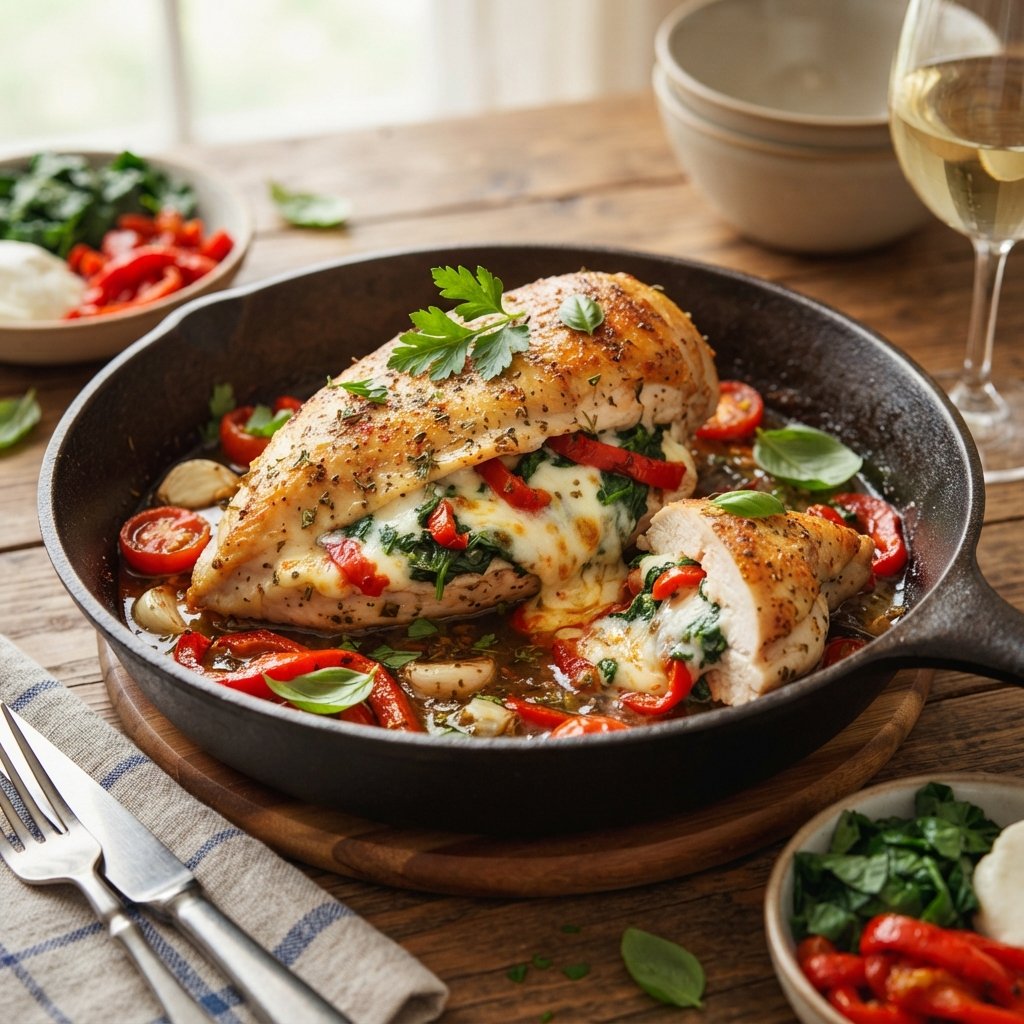
There are few culinary experiences quite as satisfying as slicing into a perfectly cooked chicken breast to reveal a molten, colorful center of roasted red peppers, wilted spinach, and gooey mozzarella cheese. This Roasted Red Pepper, Spinach, And Mozzarella Stuffed Chicken Recipe is not merely a dinner option; it is a statement of flavor, texture, and sophistication that remains accessible enough for a weeknight meal yet elegant enough for guests. The combination of savory poultry with the sweet smokiness of roasted peppers and the earthy freshness of spinach creates a harmonious balance that delights the palate. Furthermore, the addition of mozzarella provides a creamy richness that binds the ingredients together, ensuring every bite is moist and flavorful.
For home cooks looking to elevate their standard chicken routine, this dish offers a fantastic opportunity to explore stuffing techniques without the need for complex butchery or obscure ingredients. The beauty of this recipe lies in its versatility; it can be adapted to fit keto, gluten-free, or low-carb dietary preferences with minimal adjustment. Whether you are serving this alongside a crisp green salad, a bed of fluffy rice, or roasted seasonal vegetables, the stuffed chicken stands as the star of the plate. The aromas that fill the kitchen during the baking process are enough to build anticipation, promising a meal that comforts the soul while nourishing the body.
In this comprehensive guide, we will walk you through every aspect of creating this masterpiece, from understanding the historical context of stuffed meats to mastering the technical skills required to keep the filling intact during cooking. We will delve into the science of ingredient selection, offering tips on how to choose the best chicken breasts and the most flavorful cheeses. By the end of this article, you will possess not just a recipe, but a deep understanding of how to execute a stuffed chicken dish with confidence and consistency.
The History
The concept of stuffing meat is ancient, dating back to Roman times when cooks would fill various animals with grains, herbs, and other meats to enhance flavor and ensure nothing went to waste. The technique known as farce in French cuisine or ripieno in Italian cooking has evolved over centuries, transitioning from a method of preservation and economy to one of gourmet refinement. Stuffed chicken, specifically, gained popularity in Mediterranean regions where olive oil, fresh herbs, and vegetables were abundant. The combination of poultry with cheese and vegetables became a staple in Italian-American households during the 20th century, evolving into dishes like Chicken Cordon Bleu or Chicken Parmigiana.
The specific trio of roasted red peppers, spinach, and mozzarella is a modern homage to Mediterranean flavor profiles. Roasted peppers have been a staple in Spanish and Italian cuisines for centuries, prized for their ability to add sweetness without sugar. Spinach, popularized globally as a healthy green, pairs exceptionally well with dairy due to its mild flavor that absorbs surrounding tastes. Mozzarella, originating from Southern Italy, brings the essential element of filatura, or the spinning of the curd, which results in its unique melting properties. When combined, these ingredients reflect the culinary philosophy of using high-quality, simple components to create complex results.
In recent decades, stuffed chicken breasts have become a cornerstone of healthy dining. As consumers became more health-conscious, the demand for high-protein, low-carb meals increased. This recipe fits perfectly into that modern narrative, offering a nutrient-dense meal that does not sacrifice taste for health. The evolution of this dish mirrors the broader trend in home cooking where convenience meets quality, allowing cooks to prepare restaurant-quality meals in their own kitchens using readily available grocery store ingredients.
Ingredients Breakdown
Understanding the role of each component in this recipe is crucial for achieving the best possible outcome. Each ingredient contributes not only to the flavor profile but also to the texture and structural integrity of the dish. Below is a detailed analysis of what goes into this stuffed chicken and why quality matters.
- Chicken Breasts: The foundation of the dish. You want large, boneless, skinless chicken breasts that are relatively uniform in size. Look for fresh chicken that is pink and firm to the touch, avoiding any pieces that look gray or feel slimy. The size matters because you need enough surface area to butterfly and stuff without the meat tearing. Organic or free-range chicken often offers better texture and flavor due to the bird’s diet and movement.
- Fresh Mozzarella Cheese: While shredded low-moisture mozzarella works, fresh mozzarella balls (bocconcini) or a block of fresh mozzarella provide a creamier melt. The higher moisture content in fresh mozzarella creates a luscious sauce inside the chicken as it heats up. However, be mindful not to use too much, as excess moisture can make the stuffing runny. Low-moisture shredded mozzarella offers a stronger cheese pull and less water release, so choose based on your texture preference.
- Roasted Red Peppers: These provide the sweet and smoky counterpoint to the savory chicken. You can roast your own peppers over an open flame for a charred flavor, but high-quality jarred roasted peppers are a excellent time-saving alternative. Ensure they are packed in water or olive oil, not vinegar, as vinegar can overpower the delicate balance of the stuffing. Drain them thoroughly to prevent the chicken from steaming instead of roasting.
- Fresh Spinach: Spinach adds color, nutrients, and an earthy flavor. Fresh baby spinach is preferred over frozen because it wilts quickly and has a brighter taste. If using frozen spinach, it must be thawed and squeezed completely dry to avoid watering down the cheese mixture. The iron and vitamins in spinach also boost the nutritional profile of the meal significantly.
- Seasonings and Aromatics: Garlic powder, onion powder, dried oregano, salt, and black pepper are the backbone of the seasoning blend. Fresh garlic can be used for a more pungent kick, but powder distributes more evenly in the rub. Olive oil is essential for searing and keeping the exterior moist. A touch of Italian seasoning blend can unify the flavors with hints of basil and thyme.
Step-by-Step Recipe
Preparing stuffed chicken requires a bit of patience and technique, but following these detailed steps will ensure success. We will cover everything from prepping the workstation to the final rest before serving.
- Preparation and Preheating: Begin by preheating your oven to 375°F (190°C). This moderate temperature allows the chicken to cook through gently without burning the exterior before the inside is done. While the oven heats, prepare your baking dish by lightly greasing it with olive oil or cooking spray. This prevents sticking and makes cleanup easier. Gather all your ingredients and place them within arm’s reach to maintain an efficient workflow.
- Butterflying the Chicken: Place a chicken breast on a cutting board. Using a sharp knife, slice horizontally through the thickest part of the breast, stopping just before you cut all the way through. Open it like a book. This creates a pocket for the stuffing. If the breasts are very thick, you can place them between two sheets of plastic wrap and gently pound them to an even thickness of about half an inch. This ensures even cooking and makes rolling easier.
- Creating the Filling: In a medium mixing bowl, combine the chopped roasted red peppers, chopped fresh spinach, and shredded or chopped mozzarella cheese. Add a pinch of garlic powder, salt, and pepper to the mixture. If you want a creamier binding agent, you can mix in a tablespoon of cream cheese or ricotta. Stir until the ingredients are evenly distributed. The goal is a cohesive mixture that holds together when scooped.
- Stuffing and Rolling: Lay the butterflied chicken breasts flat. Divide the filling evenly among the breasts, placing it in the center of each piece. Be careful not to overstuff, as this can cause the chicken to burst during cooking. Fold the sides of the chicken over the filling and roll it up tightly. Secure the roll with toothpicks or kitchen twine to ensure it maintains its shape during the searing and baking process.
- Searing for Flavor: Heat a large oven-safe skillet over medium-high heat with a tablespoon of olive oil. Once the oil is shimmering, place the stuffed chicken breasts into the pan. Sear each side for about 2-3 minutes until a golden-brown crust forms. This step, known as the Maillard reaction, develops complex flavors and improves the texture of the chicken skin. If your skillet is not oven-safe, transfer the seared chicken to the prepared baking dish.
- Baking and Resting: Place the skillet or baking dish into the preheated oven. Bake for 20 to 25 minutes, or until the internal temperature of the chicken reaches 165°F (74°C) when measured with a meat thermometer. Avoid overcooking, as chicken breast can become dry quickly. Once done, remove from the oven and let the chicken rest for at least 5 to 10 minutes. This allows the juices to redistribute throughout the meat, ensuring a moist bite. Remove toothpicks before serving.
Tips
To elevate this recipe from good to exceptional, consider these professional tips and troubleshooting tricks. These insights come from years of culinary experimentation and are designed to help you avoid common pitfalls.
- Secure the Roll Tightly: The most common issue with stuffed chicken is the filling leaking out during baking. Use strong toothpicks or butcher’s twine to secure the chicken tightly. If using toothpicks, remember to remove them before serving to avoid any accidents.
- Dry Your Ingredients: Moisture is the enemy of a good sear. Ensure your roasted peppers are patted dry with a paper towel and your spinach is wilted and squeezed of excess water before mixing with the cheese. Excess water will steam the chicken from the inside out rather than allowing it to roast properly.
- Use a Meat Thermometer: Guessing when chicken is done often leads to dry meat. Invest in a reliable instant-read thermometer. Pull the chicken from the oven when it hits 160°F, as the temperature will rise to 165°F during the resting period due to carryover cooking.
- Pound Evenly: Uneven chicken breasts cook unevenly. Taking the extra time to pound the meat to a uniform thickness ensures that the thin ends do not dry out while waiting for the thick center to reach a safe temperature.
- Resting is Non-Negotiable: Cutting into the chicken immediately after taking it out of the oven will cause all the flavorful juices to run out onto the plate. Resting allows the muscle fibers to relax and reabsorb the moisture, keeping the meat tender.
- Make Ahead Option: You can assemble the stuffed chicken breasts up to 24 hours in advance. Store them covered in the refrigerator until you are ready to cook. This makes for an excellent meal prep option for busy weekdays.
Variations and Customizations
One of the greatest strengths of this recipe is its adaptability. You can modify the filling, the cooking method, or the accompaniments to suit different dietary needs or flavor preferences. Here are several ways to customize this dish.
- Prosciutto Wrap: For an extra layer of saltiness and texture, wrap each stuffed chicken breast in a slice of prosciutto before searing. The cured meat will crisp up in the oven, adding a delightful crunch and savory depth that complements the mozzarella.
- Pesto Infusion: Add a tablespoon of basil pesto to the spinach and cheese mixture. This introduces a burst of herbal freshness and garlic flavor that pairs beautifully with the roasted peppers. You can also drizzle extra pesto over the chicken before serving.
- Sun-Dried Tomatoes: Swap the roasted red peppers for chopped sun-dried tomatoes packed in oil. This will create a more intense, tangy flavor profile reminiscent of Tuscan cuisine. Be sure to chop them finely so they distribute evenly.
- Spicy Kick: If you enjoy heat, add red pepper flakes or a diced jalapeño to the stuffing mixture. You can also rub the exterior of the chicken with a spicy paprika blend before searing to create a flavorful crust.
- Dairy-Free Option: To make this recipe dairy-free, substitute the mozzarella with a high-quality vegan melting cheese or a cashew-based cheese alternative. Nutritional yeast can also be added to the spinach mixture to impart a cheesy, umami flavor without dairy.
- Low-Carb/Keto: This recipe is naturally low-carb, but you can ensure it is strictly keto by avoiding any sugary marinades in the jarred peppers and serving it with cauliflower rice or zucchini noodles instead of pasta or potatoes.
Health Considerations and Nutritional Value
This Roasted Red Pepper, Spinach, And Mozzarella Stuffed Chicken is not only delicious but also nutritionally robust. It serves as an excellent source of lean protein, which is essential for muscle repair and maintenance. Chicken breast is one of the leanest cuts of meat available, providing high protein content with relatively low fat, especially when the skin is removed.
The inclusion of spinach adds a significant vitamin boost, including Vitamin K, Vitamin A, and folate. Spinach is also rich in antioxidants and iron, contributing to overall energy levels and immune health. Roasted red peppers are an excellent source of Vitamin C and Vitamin B6, supporting metabolism and skin health. Together, these vegetables increase the fiber content of the meal, aiding in digestion and promoting satiety.
Mozzarella cheese provides calcium and protein, though it does add some saturated fat and sodium. Using part-skim mozzarella can reduce the fat content while still maintaining the desired melt and flavor. For those monitoring sodium intake, be mindful of the salt content in jarred peppers and cheeses, and adjust added salt accordingly. Overall, this meal is balanced, providing macronutrients and micronutrients that support a healthy lifestyle without feeling like a restrictive diet meal.
Ingredients
- 4 large boneless, skinless chicken breasts
- 1 cup fresh mozzarella cheese, shredded or chopped
- 1/2 cup roasted red peppers, drained and chopped
- 1 cup fresh spinach, chopped
- 2 cloves garlic, minced (or 1 tsp garlic powder)
- 1 teaspoon dried oregano
- 1 teaspoon Italian seasoning
- Salt and black pepper to taste
- 2 tablespoons olive oil
- Wooden toothpicks or kitchen twine
Directions
- Preheat oven to 375°F (190°C) and grease a baking dish.
- Cut a pocket into each chicken breast horizontally without cutting all the way through.
- Mix mozzarella, red peppers, spinach, garlic, and seasonings in a bowl.
- Stuff the mixture into the chicken pockets and secure with toothpicks.
- Season the outside of the chicken with salt, pepper, and Italian seasoning.
- Heat olive oil in an oven-safe skillet and sear chicken for 2-3 minutes per side.
- Transfer to the oven and bake for 20-25 minutes until internal temperature reaches 165°F.
- Let rest for 5-10 minutes before removing toothpicks and serving.
FAQ
Can I freeze stuffed chicken breasts?
Yes, you can freeze them. It is best to freeze them before baking. Assemble the stuffed chicken, wrap them tightly in plastic wrap and then foil, and freeze for up to 3 months. Thaw in the refrigerator overnight before baking according to the recipe instructions.
Why did my cheese leak out during cooking?
Cheese leakage usually happens if the chicken is overstuffing or not secured tightly enough. Ensure you leave a border around the edge of the chicken when stuffing and use toothpicks to close the gap securely. Also, make sure the cheese is not too warm before stuffing.
Can I use frozen spinach?
Yes, but you must thaw it completely and squeeze out all the excess water using a clean kitchen towel or cheesecloth. If the spinach is too wet, it will make the stuffing soggy and prevent the chicken from searing properly.
What side dishes go well with this?
This chicken pairs wonderfully with roasted asparagus, garlic mashed potatoes, quinoa, or a simple arugula salad with lemon vinaigrette. Since the chicken is rich, a light, acidic side dish helps balance the meal.
How do I know when the chicken is done without a thermometer?
While a thermometer is recommended, you can check by piercing the thickest part of the chicken with a knife. The juices should run clear, not pink. The meat should also feel firm to the touch but still have a little give, rather than feeling rubbery.
This stuffed chicken combines tender poultry with a savory medley of peppers, spinach, and cheese for a complete meal.
Perfect for healthy dinners, it delivers rich flavor and high protein in every delicious bite.