Introduction
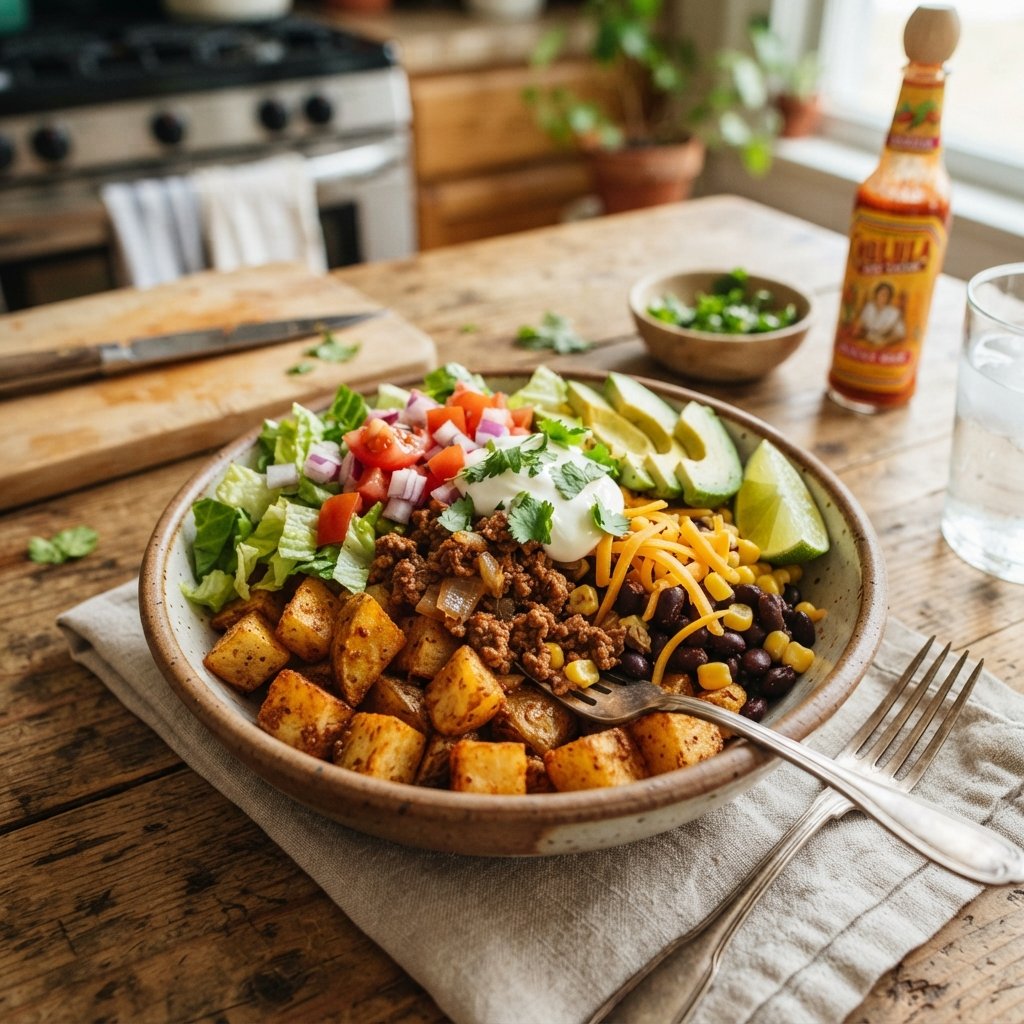
There is something undeniably magical about a meal that feels like a warm hug on a plate. In the chaotic rhythm of modern life, weeknight dinners often fall into a rut of repetition, lacking the spark of excitement that makes eating together a cherished ritual. The Loaded Potato Taco Bowl emerges as the ultimate solution to this culinary dilemma, bridging the gap between hearty comfort food and vibrant, zesty flavors. This dish is not merely a combination of ingredients; it is a celebration of texture, taste, and convenience. Imagine crispy, golden-brown potatoes seasoned with smoky cumin and paprika, nestled alongside savory ground beef or spicy black beans, all draped in melted cheddar cheese and topped with the fresh crunch of lettuce and the cool creaminess of sour cream. It is a fusion that respects the traditions of both the classic baked potato and the beloved street taco, creating a bowl that satisfies deep hunger cravings while remaining simple enough for a busy Tuesday night.
Beyond the immediate gratification of flavor, this recipe represents a shift in how we approach home cooking. It champions the idea that comfort food does not need to be unhealthy, nor does it need to take hours to prepare. By utilizing pantry staples and fresh produce, you can craft a restaurant-quality meal in your own kitchen without the premium price tag or the wait time. Whether you are feeding a hungry family, meal-prepping for the week ahead, or simply treating yourself to a nourishing dinner, the Loaded Potato Taco Bowl stands as a versatile canvas for your culinary creativity. As we delve into this guide, we will explore every facet of this dish, from its cultural roots to the nutritional benefits, ensuring you have all the knowledge required to master this easy weeknight comfort food.
The History
To truly appreciate the Loaded Potato Taco Bowl, one must understand the culinary lineage that brought these two iconic foods together. The concept of the taco bowl gained significant popularity in the United States during the 1990s, largely driven by fast-casual dining chains that sought to offer a lower-carb alternative to the traditional flour tortilla. By removing the shell and placing the fillings directly into a vessel, the taco bowl allowed for a greater volume of ingredients, transforming a light snack into a substantial meal. This innovation opened the door for endless customization, inviting cooks to experiment with grains, greens, and proteins that might not fit within the confines of a folded tortilla.
On the other side of this fusion lies the humble potato, a staple that has been revered in Mexican cuisine for centuries. Dishes like papas a la mexicana or the fried potato tacos known as tacos de papa are street food legends in many regions of Mexico. These dishes highlight the potato’s ability to absorb spices and complement rich cheeses and salsas. The convergence of the American taco bowl trend and the traditional Mexican potato taco created a natural synergy. As food bloggers and home cooks began seeking heartier vegetarian options and comfort food hybrids, the potato naturally replaced rice as the carbohydrate base in many taco bowls. This evolution reflects a broader trend in modern gastronomy: the blurring of cultural boundaries to create new, hybrid classics that honor the past while embracing contemporary tastes for convenience and bold flavors.
Ingredients Breakdown
Understanding the role of each component in your Loaded Potato Taco Bowl is crucial for achieving the perfect balance of flavor and texture. This is not just a list of items; it is an orchestra of ingredients where each plays a specific part.
The Potato Base
Russet Potatoes: These are the gold standard for this recipe due to their high starch content. When cooked, Russets develop a fluffy interior and a crispy exterior, providing the structural integrity needed to hold up the toppings. Waxy potatoes like Red Bliss may remain too firm and do not offer the same creamy mouthfeel.
Oil and Seasoning: A high-smoke point oil, such as avocado or vegetable oil, is essential for roasting or pan-frying the potatoes without burning. The seasoning blend—typically chili powder, cumin, garlic powder, and onion powder—mimics the profile of traditional taco seasoning, ensuring the potatoes taste like they belong in the bowl rather than just acting as a side dish.
The Protein
Ground Beef: For a classic approach, 85/15 ground beef offers the best balance of flavor and leanness. The fat renders out to carry the spices, creating a savory crumble that contrasts with the soft potatoes.
Black Beans: For a vegetarian or vegan option, black beans provide a creamy texture and earthy flavor. They are also packed with fiber and protein, making the bowl more nutritious without sacrificing satisfaction.
The Cheese and Dairy
Cheddar or Mexican Blend: Melting quality is key here. A sharp cheddar adds a tangy bite that cuts through the richness of the potatoes, while a Mexican blend often includes Monterey Jack for superior meltability. Freshly grated cheese melts more evenly than pre-packaged shreds, which are coated in anti-caking agents.
Sour Cream or Greek Yogurt: This element provides a cooling contrast to the spicy seasoned potatoes and meat. Greek yogurt can be used as a high-protein substitute that offers the same tang and creaminess with less fat.
The Fresh Toppings
Lettuce and Tomatoes: Crunch and acidity are vital to prevent the bowl from feeling too heavy. Iceberg or Romaine lettuce adds a refreshing snap, while diced tomatoes introduce a juicy brightness.
Cilantro and Green Onions: These herbs are not merely garnishes; they are flavor enhancers. Cilantro adds a citrusy note that is quintessential to Mexican-inspired cuisine, while green onions provide a mild, sharp bite that awakens the palate.
Step-by-Step Recipe
Creating the perfect Loaded Potato Taco Bowl is a process that rewards attention to detail. Follow this narrative guide to understand the flow of cooking, ensuring every element is ready at the right time.
Phase 1: Preparation and Prep
Begin by washing and scrubbing your potatoes thoroughly. Since the skin holds much of the fiber and flavor, we recommend leaving it on for a rustic texture. Dice the potatoes into uniform half-inch cubes. Uniformity is critical; if pieces are different sizes, some will burn while others remain undercooked. Toss the potato cubes in a large bowl with oil and your dry spice blend, ensuring every surface is coated. This coating is what creates the delicious crust during cooking.
Phase 2: Cooking the Base
Heat a large skillet or baking sheet in the oven. If pan-frying, allow the oil to shimmer before adding the potatoes in a single layer. Crowding the pan will steam the potatoes instead of frying them, resulting in a soggy texture. Cook them undisturbed for several minutes to allow a golden crust to form before flipping. If roasting, spread them on a parchment-lined sheet and bake at a high temperature to encourage crisping. While the potatoes cook, prepare your protein. Brown the ground beef or heat the black beans with additional seasoning in a separate pan. The aroma filling your kitchen at this stage is the first sign of a successful meal.
Phase 3: Assembly and Melting
Once the potatoes are tender and crisp, and the protein is cooked through, it is time to assemble. Divide the potato mixture evenly among your serving bowls. Top generously with the hot protein; the heat from the meat or beans will help begin the melting process of the cheese. Sprinkle the cheese over the top while the components are still piping hot. If the cheese is not melting sufficiently, place the bowls under the broiler for one minute, watching closely to prevent burning. Finally, add the cold, fresh toppings like lettuce, tomatoes, and sour cream. This temperature contrast between the hot base and the cool garnish is what elevates the dish from a simple hash to a gourmet bowl.
Tips
- Parboil for Speed: If you are short on time, boil the potato cubes for five minutes before frying or roasting. This reduces the cooking time in the pan significantly and ensures the insides are fully tender.
- Season in Layers: Do not rely solely on the initial seasoning on the potatoes. Salt your protein separately and taste your cheese mixture. Layering salt throughout the dish ensures every bite is flavorful.
- The Acid Balance: If the bowl feels too heavy or rich, add a squeeze of fresh lime juice over the top before serving. The acid cuts through the fat and brightens the overall flavor profile.
- Cheese Melting Trick: For the ultimate cheese pull, cover the assembled bowl with a microwave-safe plate for 30 seconds after adding the cheese. This traps the steam and melts the cheese perfectly without drying out the potatoes.
- Batch Cooking: Potatoes reheat surprisingly well. Cook a large batch of seasoned potatoes at the beginning of the week and store them in an airtight container. They can be quickly crisped up in a skillet for instant bowls.
Variations and Customizations
The beauty of the taco bowl lies in its adaptability. Here are several ways to customize the recipe to fit dietary needs or flavor preferences:
Spicy Southwest Style
Add diced jalapeños to the potatoes while they cook and top with a drizzle of spicy chipotle mayo. You can also incorporate corn kernels for a touch of sweetness that balances the heat.
Breakfast Taco Bowl
Transform this into a morning meal by swapping the ground beef for scrambled eggs and crispy breakfast bacon. Top with salsa verde and avocado slices for a energizing start to the day.
Vegan and Dairy-Free
Use seasoned lentils or crumbled tofu instead of beef. Substitute the cheddar cheese with a cashew-based nutritional yeast sauce or a high-quality vegan meltable cheese. Swap sour cream for a guacamole base to maintain creaminess without dairy.
Low-Carb Option
Replace half of the potatoes with cauliflower florets. Cauliflower roasts similarly to potatoes but contains significantly fewer carbohydrates, allowing you to enjoy the texture without the glycemic load.
BBQ Fusion
For a non-traditional twist, toss the cooked potatoes and beef in a tangy BBQ sauce instead of taco seasoning. Top with coleslaw and pickles for a barbecue-inspired potato bowl.
Health Considerations and Nutritional Value
While comfort food often carries a reputation for being indulgent, the Loaded Potato Taco Bowl can be part of a balanced diet when constructed mindfully. Potatoes are often misunderstood; they are nutrient-dense tubers rich in potassium, vitamin C, and fiber, especially when the skin is consumed. The key to healthfulness lies in the cooking method and the toppings.
Caloric Density: A standard serving can range from 400 to 600 calories depending on the amount of cheese and sour cream used. To reduce caloric density, increase the volume of vegetables like lettuce, spinach, and pico de gallo, which add bulk and nutrients without significant calories.
Macronutrients: This dish provides a robust source of carbohydrates from the potatoes, which are essential for energy. The protein from the beef or beans supports muscle repair and satiety. Fats from the cheese and oil are necessary for nutrient absorption, though portion control is advised for those monitoring fat intake.
Sodium Awareness: Pre-packaged taco seasoning mixes can be extremely high in sodium. To make this recipe heart-healthy, create your own spice blend using salt-free herbs and spices, controlling the salt addition manually. Using low-sodium beans and reducing added salt in the cooking process can significantly lower the sodium content.
Micronutrients: The addition of colorful vegetables like tomatoes, peppers, and leafy greens introduces antioxidants and vitamins A and K. Avocado adds healthy monounsaturated fats which are beneficial for heart health.
Ingredients
- 4 large Russet potatoes, washed and diced into 1/2-inch cubes
- 2 tablespoons olive oil or avocado oil
- 1 pound ground beef (85/15 lean) or 2 cans black beans, drained and rinsed
- 1 packet taco seasoning or 2 tablespoons homemade taco spice blend
- 1 cup shredded cheddar or Mexican blend cheese
- 1/2 cup sour cream or plain Greek yogurt
- 1 cup shredded iceberg or Romaine lettuce
- 1/2 cup diced tomatoes
- 1/4 cup chopped fresh cilantro
- 2 green onions, thinly sliced
- 1 lime, cut into wedges for serving
- Salt and black pepper to taste
- Optional: Sliced jalapeños, corn kernels, or salsa
Directions
- Prep the Potatoes: Preheat your oven to 400°F (200°C) if roasting, or heat a large skillet over medium-high heat if frying. Toss the diced potatoes with 1 tablespoon of oil, half of the taco seasoning, salt, and pepper.
- Cook the Potatoes: If roasting, spread potatoes on a baking sheet and bake for 25-30 minutes, flipping halfway, until golden and tender. If frying, cook in the skillet for 10-12 minutes, stirring occasionally, until crisp and cooked through. Remove and set aside.
- Prepare the Protein: In the same skillet, add the remaining oil. Add the ground beef and cook until browned and no longer pink, draining excess fat if necessary. Stir in the remaining taco seasoning and a splash of water, simmering for 2 minutes. If using beans, heat them with the seasoning and a little water until warm.
- Assemble the Bowls: Divide the cooked potatoes evenly among four serving bowls. Top each bowl with a generous portion of the seasoned beef or beans.
- Add Cheese: Sprinkle the shredded cheese over the hot meat and potatoes. If desired, place bowls under the broiler for 1-2 minutes to melt the cheese completely.
- Final Toppings: Top with shredded lettuce, diced tomatoes, sour cream, cilantro, and green onions.
- Serve: Serve immediately with lime wedges on the side for squeezing over the bowl just before eating.
FAQ
Can I make this recipe in advance?
Yes, the potatoes and protein can be cooked up to three days in advance. Store them separately in airtight containers in the refrigerator. Reheat in a skillet to restore crispiness before assembling with fresh toppings.
What is the best way to store leftovers?
Leftovers should be stored without the cold toppings (lettuce, sour cream, tomatoes). Keep the hot components in a sealed container for up to four days. Add fresh toppings when reheating to maintain texture.
Can I use sweet potatoes instead of Russets?
Absolutely. Sweet potatoes offer a sweeter flavor profile and are rich in Vitamin A. They may cook slightly faster, so keep an eye on them to prevent burning. They pair exceptionally well with black beans and spicy toppings.
How do I make this gluten-free?
This recipe is naturally gluten-free as long as you verify that your taco seasoning blend does not contain wheat-based thickeners. Most pure spice blends are safe, but always check the label.
What can I use instead of sour cream?
Guacamole, plain Greek yogurt, or a cashew cream are excellent alternatives. Guacamole adds healthy fats and creaminess, while Greek yogurt boosts protein content.
Summary
The Loaded Potato Taco Bowl combines crispy seasoned potatoes and savory protein for a perfect weeknight meal.
Customizable and nutritious, it delivers hearty comfort food flavor in a simple, easy-to-make dish.