Introduction
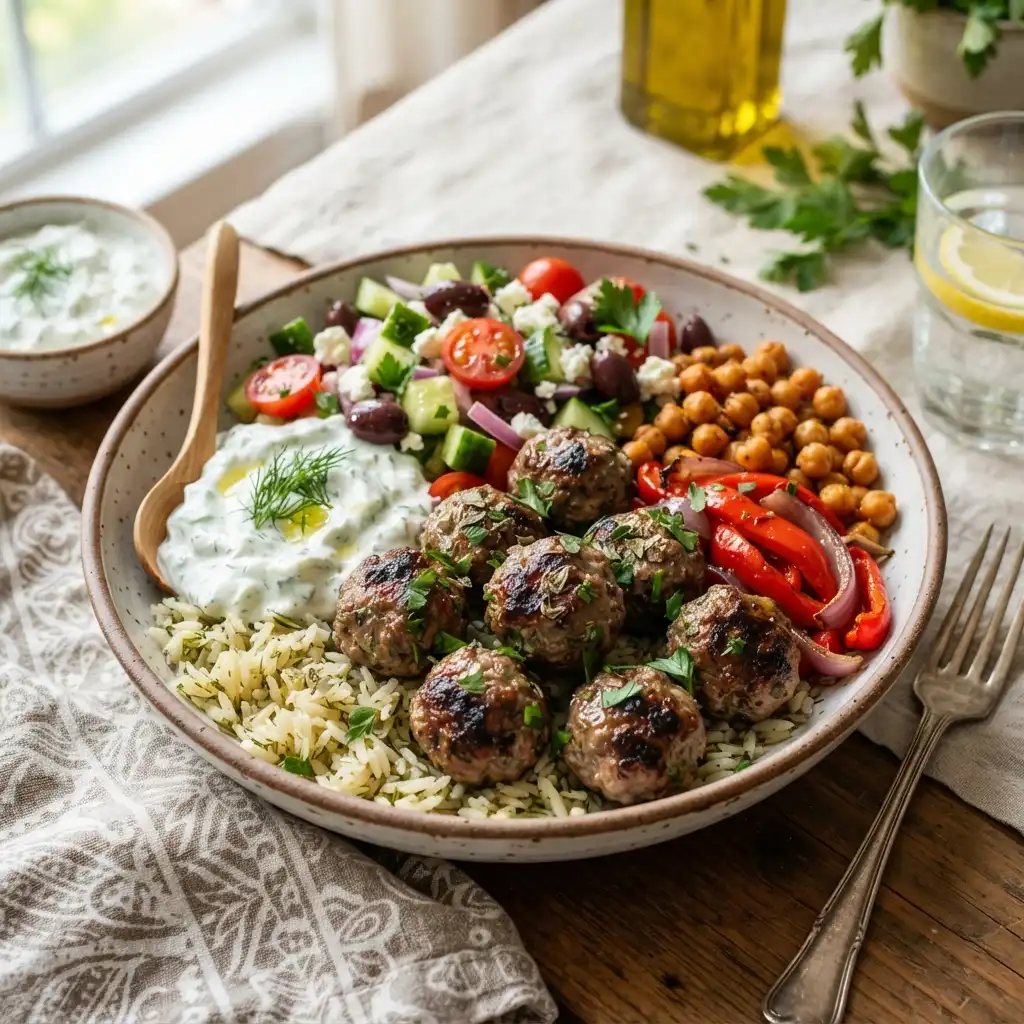
There is a profound comfort found in the architecture of a well-constructed bowl. It is a culinary format that balances texture, temperature, and nutrition in a single, harmonious vessel. The Mediterranean Meatball Bowl: Tzatziki, Rice & Colourful Veggies Delight is not merely a meal; it is a celebration of the vibrant flavors that define the sun-drenched coasts of Greece, Turkey, and the Levant. This dish brings together the savory, herb-infused depth of spiced meatballs, the cooling, creamy tang of homemade tzatziki, the comforting neutrality of fluffy rice, and the crisp, refreshing crunch of a rainbow of garden vegetables.
In a world where fast food often sacrifices quality for speed, this bowl represents the antithesis: slow-cooked flavor profiles meeting fresh, unprocessed ingredients. It is a dish designed to nourish the body while delighting the palate. The interplay between the warm, spiced meat and the cold, garlic-laden yogurt sauce creates a sensory experience that is both sophisticated and deeply satisfying. Whether you are a meal-prep enthusiast looking for a healthy lunch solution or a home cook seeking to impress dinner guests with a fusion of tradition and modern plating, this Mediterranean delight offers a versatile canvas for culinary creativity.
The History
To understand the soul of this dish, one must look back through the annals of Mediterranean culinary history. The concept of the meatball is ancient and universal, but in the Mediterranean basin, it holds a specific cultural weight. Known variously as Keftedes in Greece, Kofta in Turkey and the Middle East, and Polpette in Italy, the meatball was historically a ingenious way to stretch expensive meat with fillers like bread, rice, or bulgur, while infusing it with the abundant local herbs.
Traditionally, these meatballs were fried in olive oil or slow-simmered in tomato sauces. However, the “Bowl” concept is a more modern evolution, born from the global rise of fast-casual dining and the health-conscious movement of the 21st century. It takes the traditional components of a Greek meze platter—the meat, the yogurt dip, the salad, and the bread or grain—and deconstructs them into a single, portable serving.
Tzatziki, the crown jewel of this bowl, has roots stretching back to the Ottoman Empire. Originally a method of preserving yogurt and cucumbers, it evolved into the quintessential condiment of the region. By placing these historical elements into a bowl format, we honor the past while embracing the convenience and nutritional balance of modern dining.
Ingredients Breakdown
The magic of this recipe lies not in complex techniques, but in the quality and synergy of its components. Here is a deep dive into what makes each element essential:
The Meatballs (The Protein Anchor)
We utilize a blend of lean ground beef and lamb. While beef provides a sturdy, familiar base, the addition of lamb introduces a distinct, gamey richness that is signature to Mediterranean cuisine. The binding agents are not just functional; they are flavor carriers. Finely grated onion releases moisture and sweetness during cooking, preventing the meat from drying out. Fresh parsley and mint are non-negotiable; they provide the bright, grassy notes that cut through the fat of the meat. Spices like cumin and coriander add warmth, while a hint of cinnamon offers a subtle, mysterious depth often found in Greek cooking.
The Tzatziki (The Cooling Agent)
Authentic tzatziki relies on thick, strained Greek yogurt. The high protein content and low whey ensure the sauce clings to the meatballs rather than pooling at the bottom of the bowl. The cucumber must be seeded and grated, then aggressively squeezed to remove excess water; otherwise, the sauce will become runny. Fresh dill and a generous amount of crushed garlic provide the aromatic punch, while high-quality extra virgin olive oil adds a silky mouthfeel.
The Rice (The Comfort Base)
Long-grain white rice, such as Basmati or Jasmine, is preferred for its ability to remain fluffy and distinct. Cooking the rice in vegetable or chicken broth instead of water infuses it with savory notes from the very first bite. A squeeze of lemon juice added to the cooking liquid brightens the grain, making it a more active participant in the flavor profile rather than a passive filler.
The Colourful Veggies (The Crunch & Freshness)
This is where the “Delight” comes in. We aim for a spectrum of colors to ensure a wide range of phytonutrients. Cherry tomatoes offer bursts of acidity; cucumbers provide hydration and crunch; red onions add a sharp, sulfurous bite that mellows when dressed; and Kalamata olives bring a briny saltiness that ties the entire bowl together. Fresh spinach or arugula can be added for a leafy green component that wilts slightly against the warm rice.
Step-by-Step Recipe
Creating this bowl is a journey of layering flavors. Here is how to bring it all together seamlessly.
Phase 1: Preparation and Marination
Begin by preparing your Tzatziki. This is crucial because it needs time to rest in the refrigerator. As the flavors of the garlic and dill infuse into the yogurt, the sauce thickens and matures. Grate your cucumber, salt it, and let it sit for ten minutes to draw out moisture. Squeeze it dry using a cheesecloth or your hands. Mix it with the yogurt, garlic, lemon juice, and olive oil. Set this aside to chill.
Next, prepare the meatball mixture. In a large bowl, combine your ground meats with the grated onion, herbs, spices, egg, and breadcrumbs. Mix gently with your hands—overworking the meat can lead to tough, dense balls. Form the mixture into uniform, walnut-sized spheres. Uniformity is key here to ensure even cooking.
Phase 2: Cooking the Components
While the meatballs rest, start your rice. Rinse the grains thoroughly to remove excess starch. Combine with your broth in a pot, bring to a boil, then reduce to a simmer and cover. Let the steam do the work.
For the meatballs, you have two options: baking or pan-searing. Baking at 400°F (200°C) is healthier and requires less attention, yielding a tender interior. Pan-searing in olive oil creates a delicious, caramelized crust (the Maillard reaction) that adds texture. If pan-searing, turn them frequently to brown all sides without burning the herbs.
Phase 3: Assembly
Assembly is an art form. Start with a base of the warm, fluffy rice. Arrange the meatballs around the perimeter or in the center. Drizzle the cold Tzatziki generously over the hot meat—the temperature contrast is delightful. Finally, scatter your chopped vegetables over the top. Finish with a drizzle of high-quality olive oil and a sprinkle of dried oregano or sumac for a final aromatic lift.
Tips
- The Ice Water Trick: When mixing your meatballs, keep your hands wet with ice water. This prevents the fat in the meat from melting prematurely due to the heat of your hands, ensuring a tender texture.
- Rest the Meat: Allow your formed meatballs to rest in the fridge for 30 minutes before cooking. This helps them hold their shape better during the cooking process.
- Salt the Cucumber: Do not skip salting and draining the cucumber for the tzatziki. Watery tzatziki will dilute the flavors of the entire bowl.
- Toast the Spices: If using whole cumin or coriander seeds, toast them in a dry pan for a minute before grinding. This releases essential oils and intensifies the flavor significantly.
- Acid is Key: If the bowl feels too heavy, add more lemon juice. Acid cuts through fat and wakes up the palate.
Variations and Customizations
This recipe is a template that welcomes adaptation based on dietary needs and personal preference.
Dietary Swaps
- Gluten-Free: Substitute the breadcrumbs in the meatballs with crushed gluten-free crackers, almond flour, or cooked quinoa.
- Keto/Low-Carb: Replace the rice base with cauliflower rice or a bed of massaged kale. Ensure your meatballs use almond flour instead of breadcrumbs.
- Dairy-Free: Use a thick, unsweetened coconut yogurt or a cashew-based yogurt alternative for the tzatziki.
- Vegetarian/Vegan: Replace the meat with a mixture of cooked lentils, mashed chickpeas, and walnuts, bound with flax eggs. The spices remain the same to mimic the flavor profile.
Flavor Twists
- The Spicy Kick: Add harissa paste to the meatball mix or drizzle a chili-infused olive oil over the finished bowl.
- The Pickled Element: Add pickled red onions or pepperoncini peppers to introduce a sharp, vinegary crunch.
- The Grain Swap: Exchange white rice for farro, quinoa, or couscous for a nuttier texture and higher fiber content.
Health Considerations and Nutritional Value
The Mediterranean Meatball Bowl is a powerhouse of nutrition, aligning closely with the principles of the Mediterranean Diet, which is consistently ranked as one of the healthiest eating patterns in the world.
Protein Power: The combination of lean beef/lamb and Greek yogurt provides a high amount of complete protein, essential for muscle repair and satiety.
Healthy Fats: Olive oil and the natural fats in the meat provide monounsaturated fats, which are beneficial for heart health. The olives add additional healthy fats and antioxidants.
Micronutrients: The colorful array of vegetables ensures a high intake of Vitamins A, C, and K, as well as potassium and folate. The garlic and onions offer prebiotic fibers that support gut health.
Caloric Balance: By controlling the portion of rice and emphasizing the vegetables, this meal offers a high volume of food for a moderate caloric cost, making it excellent for weight management.
Ingredients
- For the Meatballs:
- 1 lb (450g) ground beef (lean)
- 1/2 lb (225g) ground lamb
- 1/2 cup finely grated onion
- 1/4 cup fresh parsley, chopped
- 2 tbsp fresh mint, chopped
- 2 cloves garlic, minced
- 1/2 cup breadcrumbs (or almond flour)
- 1 large egg
- 1 tsp ground cumin
- 1 tsp dried oregano
- 1/2 tsp cinnamon
- Salt and black pepper to taste
- For the Tzatziki:
- 1 cup Greek yogurt (full fat or 2%)
- 1/2 cucumber, grated and drained
- 1 clove garlic, minced
- 1 tbsp fresh dill, chopped
- 1 tbsp lemon juice
- 1 tbsp extra virgin olive oil
- For the Bowl:
- 1 cup uncooked long-grain white rice (Basmati or Jasmine)
- 2 cups chicken or vegetable broth
- 1 cup cherry tomatoes, halved
- 1/2 cup Kalamata olives, pitted
- 1/2 cup cucumber, diced
- 1/4 cup red onion, thinly sliced
- Fresh spinach or arugula (optional)
- Lemon wedges and extra olive oil for serving
Directions
- Make the Tzatziki: Grate the cucumber and sprinkle with salt. Let sit for 10 minutes, then squeeze out excess liquid using a clean kitchen towel. In a bowl, mix the cucumber with yogurt, minced garlic, dill, lemon juice, and olive oil. Refrigerate until ready to serve.
- Cook the Rice: Rinse the rice under cold water until the water runs clear. In a saucepan, combine rice and broth. Bring to a boil, reduce heat to low, cover, and simmer for 15-18 minutes until liquid is absorbed. Fluff with a fork.
- Prepare Meatballs: Preheat oven to 400°F (200°C). In a large bowl, combine beef, lamb, grated onion, herbs, spices, egg, and breadcrumbs. Mix gently until just combined. Roll into 1.5-inch balls.
- Cook Meatballs: Place meatballs on a baking sheet lined with parchment paper. Bake for 20-25 minutes until browned and cooked through (internal temp 160°F). Alternatively, pan-sear in olive oil for 10-12 minutes.
- Prep Veggies: While meat cooks, chop tomatoes, dice cucumber, slice onions, and pit olives.
- Assemble: Divide rice among bowls. Top with meatballs and fresh veggies. Drizzle generously with Tzatziki. Garnish with a drizzle of olive oil and a squeeze of fresh lemon juice.
FAQ
Can I freeze the meatballs?
Yes, you can freeze the cooked meatballs for up to 3 months. Let them cool completely before placing them in an airtight container. Thaw in the refrigerator overnight and reheat in the microwave or oven.
How long does the Tzatziki last?
Homemade tzatziki stays fresh in the refrigerator for up to 4 days. However, it is best consumed within 2 days as the cucumber may continue to release water over time.
Can I make this ahead for meal prep?
Absolutely. This is an excellent meal prep dish. Store the rice, meatballs, and veggies in separate compartments of your container. Keep the tzatziki in a small separate jar to prevent the rice from getting soggy. Assemble when ready to eat.
What can I use instead of lamb?
If you cannot find ground lamb or prefer not to use it, you can substitute it with an equal amount of ground beef, ground turkey, or ground chicken. The flavor will be milder, so you may want to increase the herbs slightly.
Summary
This Mediterranean Meatball Bowl combines spiced beef and lamb with cooling tzatziki, fluffy rice, and fresh vegetables for a nutrient-dense, flavor-packed meal. It is a versatile dish that honors ancient culinary traditions while offering a modern, healthy approach to dining.