Introduction
In the ever-evolving landscape of modern comfort food, few trends have captured the collective imagination of home cooks and foodies quite like the Viral Hot Honey Ground Beef Bowls. This dish represents the perfect convergence of sweet, spicy, savory, and umami flavors, packaged into a meal that is as visually stunning as it is delicious. Born from the intersection of social media culinary trends and the timeless appeal of a hearty beef bowl, this recipe has skyrocketed in popularity across platforms like TikTok and Instagram, where videos of the glossy, chili-flecked beef being poured over steaming rice have garnered millions of views. The allure lies in its simplicity; it requires minimal prep time, uses pantry staples, and delivers a restaurant-quality flavor profile that feels indulgent yet remains manageable for a weeknight dinner. Whether you are a busy parent looking for a quick family meal, a student seeking a budget-friendly feast, or a culinary enthusiast eager to replicate the latest viral sensation, this bowl offers a satisfying experience that warms the soul and excites the palate. The contrast between the rich, browned ground beef and the sticky, fiery sweetness of the hot honey glaze creates a addictive taste sensation that keeps people coming back for seconds. Furthermore, its versatility allows it to be customized for various dietary needs, making it a staple in many modern kitchens. As we delve deeper into this guide, you will discover not just how to make this dish, but the science behind why it works, the history of its components, and how to master it to perfection every single time.
The History
To truly appreciate the Viral Hot Honey Ground Beef Bowl, one must understand the culinary lineage that contributed to its creation. The concept of the “rice bowl” is universal, appearing in various forms across cultures, from the Japanese donburi to the Korean bibimbap and the American hamburger steak over rice. However, the specific flavor profile of this viral sensation is a modern fusion rooted in recent culinary trends. The star component, hot honey, has seen a meteoric rise in the last decade. While infusing honey with chili peppers is a practice found in various traditional cuisines, including parts of Italian and Chinese cooking, it was popularized in the American mainstream by brands like Mike’s Hot Honey, originally created for pizza but quickly adopted by chefs for fried chicken and glazes. This sweet-heat combination tapped into the human biological preference for contrasting flavors. Simultaneously, ground beef has remained a cornerstone of affordable protein since the industrialization of meat processing in the 19th century. The fusion of these elements gained traction during the pandemic era, when home cooks were experimenting with limited ingredients and seeking comfort through bold flavors. Social media algorithms favored high-contrast visuals, and the glossy sheen of hot honey on browned beef provided exactly that. The dish also draws heavy inspiration from Korean-American fusion cuisine, particularly the use of gochujang or chili flakes paired with sweeteners like sugar or honey, reminiscent of Korean bulgogi but simplified for mass appeal. As food influencers began posting their variations, the recipe evolved from a simple glaze to a complex bowl experience involving pickled vegetables, creamy sauces, and specific rice preparations, cementing its status as a viral icon of the 2020s culinary scene.
Ingredients Breakdown
Understanding the role of each component in this recipe is crucial for mastering the flavor balance. Here is a detailed analysis of why each ingredient is selected and how it contributes to the final dish:
- Ground Beef (80/20 Blend): The foundation of the bowl. An 80/20 blend (80% lean, 20% fat) is ideal because the fat renders out during cooking, providing richness and preventing the meat from becoming dry. Leaner blends may result in a tougher texture, while higher fat content can make the dish overly greasy.
- Honey: The source of sweetness and gloss. Raw honey offers floral notes, while standard clover honey provides a neutral sweetness that allows the spices to shine. When heated, the sugars caramelize, creating a sticky glaze that clings to the beef.
- Chili Flakes or Hot Sauce: This provides the “hot” in hot honey. Red pepper flakes offer a slow-building heat and texture, whereas sauces like Sriracha or Gochujang add fermentation depth and immediate spice. The capsaicin triggers endorphin release, enhancing the eating experience.
- Soy Sauce: The primary source of umami and salt. Soy sauce contains glutamates which deepen the savory profile of the beef, balancing the sweetness of the honey. Tamari can be used for a gluten-free alternative without sacrificing flavor.
- Garlic and Ginger: Aromatic essentials. Garlic provides a pungent, savory backbone, while fresh ginger adds a zesty, slightly peppery warmth that cuts through the richness of the fat. Together, they form the aromatic base common in many Asian-inspired dishes.
- Rice Vinegar: Acid is necessary to balance fat and sugar. A splash of rice vinegar brightens the sauce, preventing it from becoming cloyingly sweet and adding a layer of complexity to the glaze.
- Jasmine or Short-Grain Rice: The vessel. Jasmine rice offers a fragrant, fluffy texture, while short-grain rice provides a stickier, chewier consistency that holds the sauce better. The choice depends on personal preference for texture.
- Green Onions and Sesame Seeds: Garnishes that add freshness and crunch. Green onions provide a sharp, oniony bite that contrasts the cooked flavors, while toasted sesame seeds add a nutty aroma and visual appeal.
Step-by-Step Recipe
Creating the perfect Viral Hot Honey Ground Beef Bowl requires attention to timing and heat management. Follow this detailed narrative guide to ensure every element comes together harmoniously.
Phase 1: Preparation and Mise en Place
Before turning on the stove, ensure all your ingredients are measured and ready. This recipe moves quickly once the cooking begins, so having your sauce mixed and vegetables chopped is essential. Start by rinsing your rice until the water runs clear to remove excess starch, which prevents clumping. Cook the rice according to package instructions, aiming for a slightly firm texture so it doesn’t become mushy when the hot sauce is added. While the rice cooks, prepare your aromatics. Mince the garlic finely to ensure it disperses evenly throughout the meat, and grate the fresh ginger to release its juices. In a small bowl, whisk together the honey, soy sauce, chili flakes, vinegar, and a splash of water to create your hot honey sauce. Having this pre-mixed ensures the glaze coats the beef evenly without burning the honey in the pan.
Phase 2: Browning the Beef
Place a large skillet or wok over medium-high heat. Allow the pan to get hot before adding a small amount of oil. Add the ground beef, breaking it apart with a wooden spoon or spatula. The key here is to resist the urge to stir constantly. Let the beef sit for a minute or two to develop a brown crust, known as the Maillard reaction, which creates deep savory flavors. Once browned on one side, flip and break up further until fully cooked and no pink remains. If there is excessive grease, drain some off, but leave about a tablespoon to help emulsify the sauce. Add the minced garlic and ginger during the last minute of cooking to prevent them from burning, stirring constantly until fragrant.
Phase 3: Glazing and Reduction
Reduce the heat to medium-low and pour the pre-mixed hot honey sauce over the beef. Stir gently to coat every crumble of meat. Allow the mixture to simmer for 3 to 5 minutes. You are looking for the sauce to reduce and thicken into a glossy glaze rather than a watery soup. If the sauce is too thick, add a teaspoon of water; if too thin, let it simmer longer. The consistency should be sticky enough to cling to the beef when lifted with a spoon. Taste and adjust seasoning here; if you need more heat, add extra chili flakes, or if it needs more salt, add a dash of soy sauce.
Phase 4: Assembly and Serving
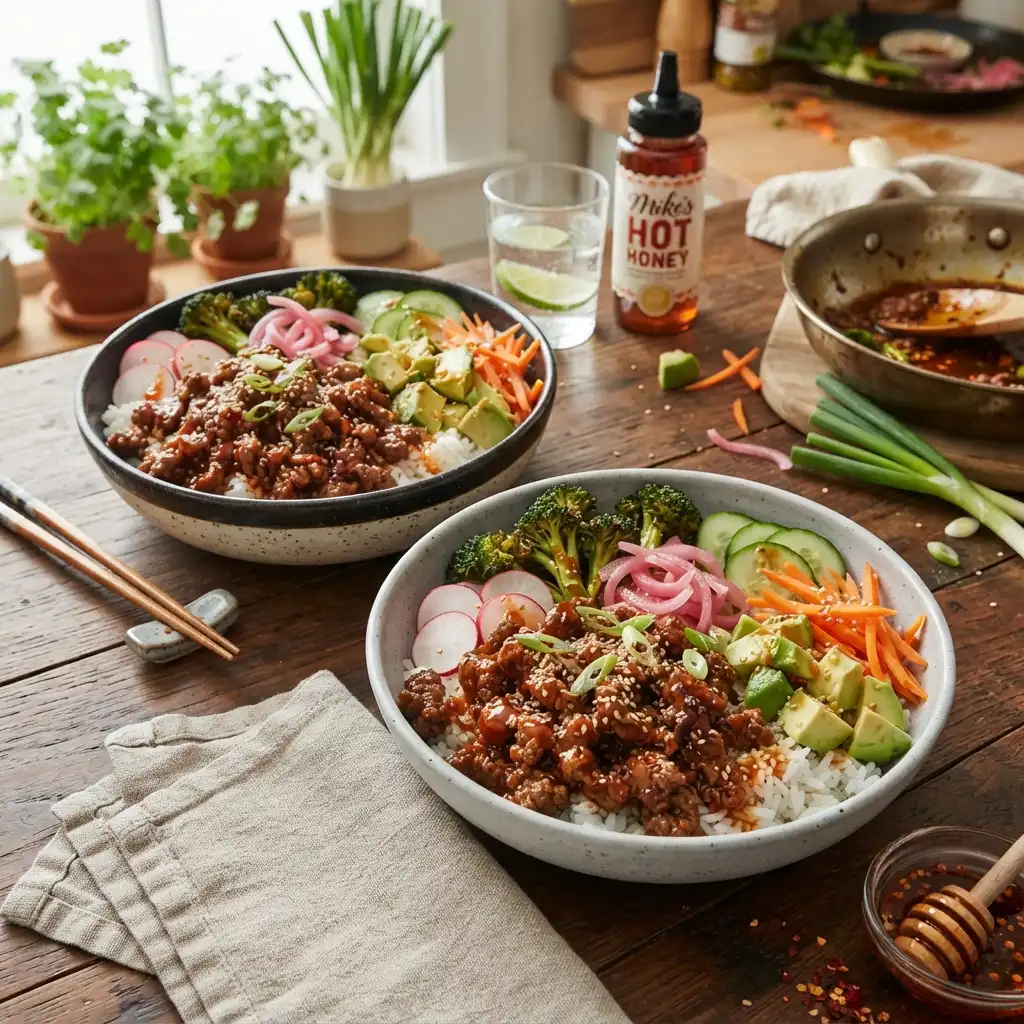
To serve, scoop a generous portion of steaming rice into a bowl. Create a slight well in the center of the rice to hold the beef. Ladle the hot honey ground beef over the rice, ensuring you get plenty of the glossy sauce. Top with sliced green onions, toasted sesame seeds, and any additional vegetables you prefer, such as shredded carrots or cucumbers. Serve immediately while the beef is hot and the rice is steaming to enjoy the full contrast of temperatures and textures.
Tips
To elevate your Viral Hot Honey Ground Beef Bowls from good to exceptional, consider these professional chef tips and tricks:
- Control the Heat: Honey burns easily due to its high sugar content. Always reduce the heat when adding the sauce to prevent bitterness from caramelized sugars turning into burnt carbon.
- Double the Batch: This recipe reheats exceptionally well. Making a double batch allows you to have meal-prepped lunches for the week, as the flavors often deepen after sitting in the refrigerator overnight.
- Toast Your Sesame Seeds: While optional, toasting sesame seeds in a dry pan for a minute releases their essential oils, providing a significantly more nutty and aromatic garnish than raw seeds.
- Use Fresh Ginger: Avoid using powdered ginger in the glaze. Fresh ginger provides a bright, zesty heat that complements the chili flakes, whereas powdered ginger can taste dusty and muted.
- Don’t Skip the Acid: The vinegar is not optional. It cuts through the fat of the beef and the sugar of the honey, balancing the palate so the dish doesn’t feel too heavy.
- Crispy Rice Technique: For an added texture contrast, try pan-frying the cooked rice in a little oil before serving to create crispy edges, similar to a tahdig or socarrat.
- Rest the Meat: Let the beef rest for a minute after cooking before serving. This allows the juices to redistribute, ensuring the meat remains tender within the glaze.
Variations and Customizations
One of the greatest strengths of this recipe is its adaptability. Whether you have dietary restrictions or simply want to experiment with different flavor profiles, here are several ways to customize your bowl:
- Protein Swaps: While ground beef is traditional, this glaze works wonderfully with ground chicken, turkey, or pork. For a seafood option, try large shrimp cooked quickly in the sauce. For a plant-based version, use crumbled firm tofu or a meatless ground substitute like Beyond or Impossible meat.
- Spice Levels: Adjust the heat to your tolerance. For a mild version, omit the chili flakes and use a mild hot sauce. For extreme heat, incorporate chopped fresh jalapeños, habanero-infused honey, or a dash of cayenne pepper.
- Low-Carb/Keto: Replace the rice with cauliflower rice or shredded cabbage. Ensure your honey substitute is keto-friendly, such as allulose or monk fruit syrup mixed with a little molasses for color.
- Gluten-Free: Use Tamari or Coconut Aminos instead of traditional soy sauce to eliminate gluten. Ensure your hot sauce and vinegar are also certified gluten-free.
- Vegetable Add-ins: Bulk up the nutrition by stirring in frozen peas, corn, or diced bell peppers during the last few minutes of cooking. Pickled radishes or cucumbers on the side add a crunchy, acidic contrast.
- Creamy Element: Add a dollop of spicy mayo or a drizzle of sriracha mayo on top for a creamy richness that complements the sticky sweetness of the beef.
- International Twists: Add a splash of coconut milk for a Thai-inspired curry bowl version, or sprinkle with furikake for a Japanese-inspired twist.
Health Considerations and Nutritional Value
While this dish is undeniably delicious, it is important to consider its nutritional profile to fit it into a balanced diet. The primary source of protein is the ground beef, which provides essential amino acids, iron, zinc, and Vitamin B12. However, the fat content can vary based on the beef blend chosen; opting for leaner beef can reduce saturated fat intake. The honey contributes simple carbohydrates and sugars, which provide quick energy but should be moderated for those monitoring blood sugar levels. The sodium content can be high due to the soy sauce, so individuals with hypertension should consider using low-sodium soy sauce or reducing the quantity. On the positive side, the garlic, ginger, and chili peppers offer anti-inflammatory properties and antioxidants. Capsaicin, found in chili peppers, may boost metabolism slightly. To increase the nutritional density, it is highly recommended to add a significant portion of vegetables, such as steamed broccoli, spinach, or a side salad, to increase fiber intake and promote satiety. Overall, when consumed in moderation and paired with fiber-rich vegetables, this bowl can be part of a healthy lifestyle, providing a satisfying balance of macronutrients that prevents overeating later in the day.
Ingredients
- 1 pound ground beef (80/20 blend recommended)
- 1 cup jasmine rice, uncooked (or 3 cups cooked)
- 1/3 cup honey
- 3 tablespoons soy sauce (or tamari for gluten-free)
- 1 tablespoon rice vinegar
- 1 teaspoon red pepper flakes (adjust to taste)
- 3 cloves garlic, minced
- 1 teaspoon fresh ginger, grated
- 1 tablespoon sesame oil
- 2 green onions, sliced for garnish
- 1 tablespoon toasted sesame seeds
- Salt and black pepper to taste
- Optional: 1 tablespoon cornstarch mixed with 2 tablespoons water (for thicker sauce)
Directions
- Cook the rice according to package instructions and keep warm.
- In a small bowl, whisk together honey, soy sauce, rice vinegar, red pepper flakes, minced garlic, and grated ginger.
- Heat sesame oil in a large skillet over medium-high heat.
- Add ground beef to the skillet, breaking it apart with a spoon. Cook until browned and fully cooked through, about 7-10 minutes.
- Drain excess fat if necessary, leaving about 1 tablespoon in the pan.
- Pour the honey sauce mixture over the cooked beef.
- Reduce heat to medium-low and simmer for 3-5 minutes until the sauce thickens and glazes the meat. (Add cornstarch slurry here if a thicker sauce is desired).
- Remove from heat and taste. Adjust seasoning with salt or pepper if needed.
- Serve the hot honey beef over the cooked rice.
- Garnish with sliced green onions and toasted sesame seeds before serving.
FAQ
Can I make this recipe ahead of time?
Yes, this dish is excellent for meal prep. You can cook the beef and sauce up to 4 days in advance. Store it in an airtight container in the refrigerator. Reheat gently in the microwave or on the stove with a splash of water to loosen the sauce.
How spicy is this recipe?
The standard recipe offers a medium heat level, suitable for most people who enjoy a little kick. The heat comes primarily from the red pepper flakes. You can control the spice level by reducing the flakes for mild or adding fresh chilies for extra heat.
Can I freeze the ground beef mixture?
Absolutely. The beef mixture freezes well for up to 3 months. Let it cool completely before transferring to a freezer-safe bag or container. Thaw overnight in the refrigerator before reheating.
What can I use instead of honey?
If you are vegan or out of honey, maple syrup or agave nectar works as a suitable substitute. The flavor profile will shift slightly, but the sweet and sticky texture will remain similar.
Why is my sauce too runny?
If the sauce hasn’t reduced enough, simmer it for a few more minutes. Alternatively, use a cornstarch slurry (cornstarch mixed with cold water) and stir it into the simmering sauce to thicken it immediately.
Is this dish gluten-free?
It can be. To make it gluten-free, ensure you use Tamari instead of regular soy sauce and verify that your hot sauce and vinegar are certified gluten-free. Serve with rice instead of noodles.
Summary (in two lines)
This Viral Hot Honey Ground Beef Bowl combines savory browned beef with a sweet and spicy glaze for a quick, comforting meal.
Perfect for meal prep, it offers customizable heat and flavors that satisfy cravings while remaining easy to prepare.